News

LABIMeeting-2026-RegisterNow-WEB-1280x566.png

Registration is officially open for LABI Meeting 2026. This year’s edition will bring together researchers, facility managers, and infrastructure builders from across Latin America for three intensive days of presentations, discussions, and hands-on experiences in Panama City, Panama.

LABI Meeting 2026 continues the tradition of being the key gathering point for the Latin American bioimaging community — a space to share advances, forge collaborations, and address shared challenges in scientific infrastructure.

Program highlights

  • November 23 – Imaging & Omics in Action: Bridging imaging with multi-omics approaches across biodiversity and biomedical research contexts.
  • November 24 – Big Data, Repositories & Scalable Infrastructure: Tackling massive imaging datasets: storage, processing, FAIR principles, and AI-readiness.
  • November 25 – Facility Visits & Outreach Activity: Visits to INDICASAT-AIP and the Smithsonian Tropical Research Institute, plus hands-on science engagement with local communities.

Registration fees

  • Scientific / Academic: USD 100 (Early Bird, until July 20) · USD 150 from July 21
  • Industry: USD 450 (Early Bird rate)
  • Virtual attendance: Free

LABI active members are eligible for a discount — membership will be verified at payment.

Key dates

  • Early Bird period closes: July 20, 2026
  • In-person registration closes: August 31, 2026
  • Virtual registration closes: October 31, 2026

How registration works

Submitting the form opens your registration but does not confirm your spot. Before the Early Bird period closes on July 20, you will receive an email with instructions to complete your payment.

Questions? Write to latambioimaging@gmail.com

Spots are limited — Register here

LABI-IDEM2026-primerasalida-bannerweb-1280x566.png

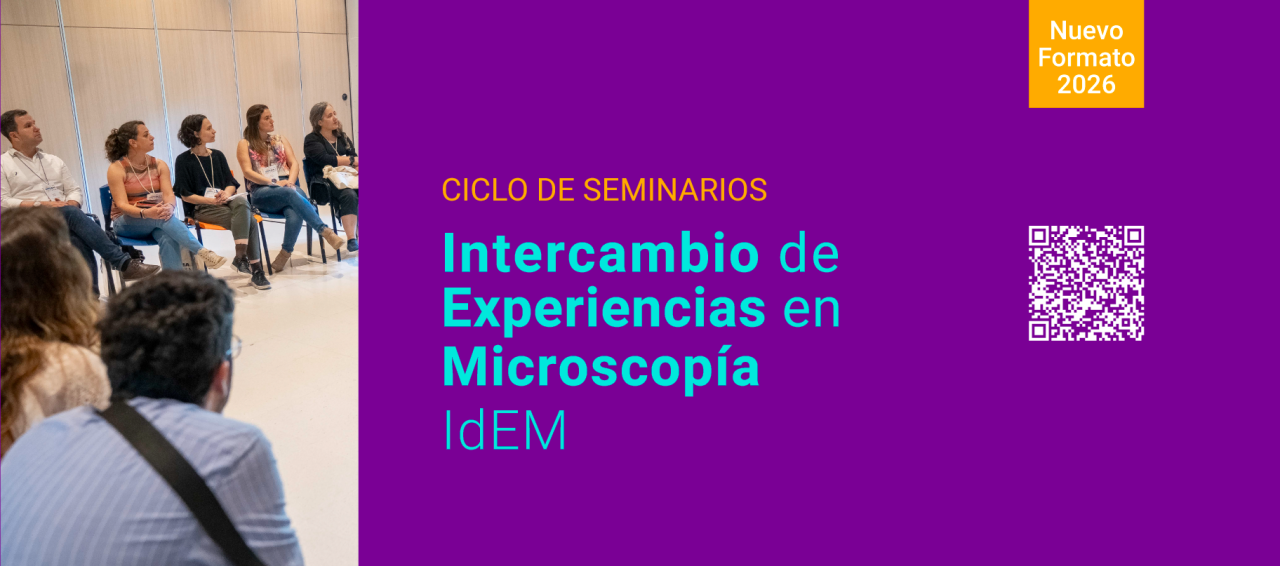
Our virtual space Intercambio de Experiencias en Microscopía – IdEM is back, organized by the Training & Education Working Group. This 2026 Cycle is titled: Microscopy in Practice – Behind-the-Scenes Experiences in Bioimaging

  • Modality: Virtual (with registration)
  • Time: 12:00 h (GMT-3) Duration: 60 minutes


New Interactive Format 2026

This year, IdEM will be even more interactive. Guests, live questions, and audience participation through chat, microphone, and Mentimeter, generating real-time exchange between guests and the community.

Each session will include:

  • 3 Guests sharing experiences and questions
  • Active participation via chat, microphone, and Mentimeter
  • Real-time exchange between speakers and audience
  • Key questions we will explore together

Session structure:

  • Welcome and connection to Mentimeter
  • Presentation of speakers and moderator
  • Interactive Q&A cycle between moderator, speakers, and participants
  • Closing and upcoming sessions

The talks will be in Spanish and Portuguese.

Register here


Session 1. Getting to Know Each Other: Hidden Wisdom in Microscopy Core Facilities
  • Thursday, June 4 – 12:00 (GMT-3)

Description: Behind every cover image there is an expert technician and a logistical challenge that few ever see. We open the 2026 cycle by inviting you to discover the secrets inside a Core Facility — insights that will help you make the most of your time at the microscope. Join the conversation with those responsible for day-to-day operations at different centers across Latin America as we answer what every microscopist needs to know.

Key questions:

  • The “Unwritten Manual”: What is the #1 mistake that ruins your images?
  • What artifacts are common in Fluorescence and Electron Microscopy?
  • Autonomy or assistance? How long does it take to become an expert?
  • Data, not just photos: How to turn pixels into quantitative science.

Guests:

  • Nicole Salgado (Santiago, Chile)
  • Carlos Mas (CEMINCO, CONICET – Universidad Nacional de Córdoba, Argentina)
  • Juan Orozco (MicroCore, Universidad de los Andes, Colombia)

Moderators:

  • Iván Rey
  • Victoria Repetto


Session 2. Volumetric Microscopy: From 2D to 3D in Practice
  • Wednesday, July 2 – 12:00 (GMT-3)

Description: Volumetric microscopy has revolutionized our ability to understand three-dimensional structures, but implementing it in daily practice presents unique challenges. In this session we will explore different approaches to 3D imaging: from confocal and lightsheet microscopy to volumetric electron microscopy techniques. We will share experiences on sample preparation, acquisition protocol optimization, and strategies for managing and analyzing large data volumes. We will discuss which technique to choose based on the biological system, available resources, and the scientific questions we want to answer.

Key questions:

  • What volumetric technique do you use most frequently and why?
  • What is your main challenge in sample preparation for 3D imaging?
  • How do you manage the storage and processing of large volumetric datasets?
  • What software/pipeline do you use for 3D image analysis?
  • How much time do you typically spend optimizing a 3D acquisition protocol?
  • What advice would you give to someone just starting out with volumetric microscopy?

Guests:

  • TBD – specialists in confocal/lightsheet/FIB-SEM

Moderator:

  • Aníbal Vargas (LiSIUM, UM, Santiago de Chile)


Session 3. Microscopy in Neurons: Visualizing the Nervous System
  • Wednesday, July 30 – 12:00 (GMT-3)

Description: Nervous tissue presents unique challenges for microscopy due to its structural complexity, fragility, and the spatial scales that must be covered — from nanometric synapses to millimeter-scale neural networks. In this session we will share practical experiences working with neurons: from cell cultures to intact brain tissue. We will discuss labeling strategies, clearing techniques for dense tissue, approaches for imaging live versus fixed cells, and how to capture both fine morphology and functional activity. We will explore what has worked (and what hasn’t!) when attempting to visualize the extraordinary complexity of the nervous system.

Key questions:

  • What system do you work with most: neuronal cultures, slices, or intact tissue?
  • What is your greatest technical challenge when imaging neurons?
  • What labeling/contrast method do you prefer for your system and why?
  • Have you used tissue clearing techniques? Which one, and with what results?
  • How do you balance spatial vs. temporal resolution in functional imaging?
  • What do you wish you had known before starting to do microscopy in neurons?

Guests:

  • TBD – neuroscientists with different approaches

Moderator:

  • Luciana Gallo


Session 4. Intravital Imaging: Seeing Life in Action
  • Wednesday, August 27 – 12:00 (GMT-3)

Description: Intravital imaging allows us to observe biological processes in living organisms, but it requires overcoming unique technical and biological challenges. In this session we will share practical experiences with different intravital microscopy approaches: from imaging transparent embryos to surgical windows in mammalian models. We will discuss animal preparation, sample stabilization during acquisition, motion management and physiological signals, labeling strategies that minimize perturbation, and ethical considerations. We will explore how to obtain informative data while keeping the organism under the most natural physiological conditions possible.

Key questions:

  • What model/organism do you use for intravital imaging and why did you choose it?
  • What is your main strategy for stabilizing the sample during acquisition?
  • How do you manage motion due to breathing/circulation?
  • What fluorescent markers have given you the best results in vivo?
  • What has been your greatest technical or ethical challenge in intravital imaging?
  • What maximum duration have you achieved in imaging sessions without compromising the animal?

Guests:

  • TBD – intravital specialists

Moderator:

  • Vanessa De Cassia Martins


Session 5. Image Analysis in Daily Practice: From Pixels to Papers
  • Wednesday, September 24 – 12:00 (GMT-3)

Description: Acquiring beautiful images is just the beginning — transforming them into robust quantitative data is where the science happens. In this session we will share practical analysis workflows used on a daily basis: from basic pre-processing to automated segmentation and quantification. We will discuss which tools to choose based on the type of analysis (Fiji/ImageJ, CellProfiler, ilastik, QuPath, Python, or commercial tools), how to validate our analysis methods, batch processing strategies, and best practices for documenting reproducible pipelines. We will also share our most common mistakes and how we detected and corrected them.

Key questions:

  • What analysis tool(s) do you use most frequently?
  • What is your greatest challenge in image analysis?
  • How do you decide whether manual vs. automated analysis is more appropriate?
  • What strategy do you use to validate that your analysis pipeline works correctly?
  • How do you document your analysis to ensure reproducibility?
  • Have you found any “trick” or best practice that significantly improved your analysis?

Guests:

  • TBD – specialists in different tools/approaches

Moderator:

  • Lorena Sigaut


Session 6. Getting to Know Each Other: Latin American Core Facilities on the Move
  • Wednesday, October 22 – 12:00 (GMT-3)

Description: We close the 2026 cycle by taking a close look at how different core facilities in Latin America operate, this time focusing on how they innovate and sustain themselves over time. Three facilities will share their strategies for staying technologically up to date with limited budgets, how they generate value for their institutions, their funding models (internal, external, mixed), and how they measure and communicate their impact. We will also discuss how these facilities are incorporating new trends (AI, data management, multimodal imaging) and preparing for the future. An opportunity to learn not only what facilities do, but how they ensure they can keep doing it.

Key questions:

  • What is your funding model and how sustainable do you consider it?
  • How do you justify investments in new equipment/technologies to your institution?
  • What metrics do you use to demonstrate the impact/value of your facility?
  • How do you stay current with new technologies without large budgets?
  • What recent innovation did you implement and how did it turn out?
  • What is your vision for your facility over the next 3–5 years?

Guests:

  • TBD – 3 facilities different from those in May, ideally from different countries

Moderators:

  • Iván Rey / Victoria Repetto


Want to be part of IdEM?

Do you have an experience to share? This space is collaborative and is built by the entire LABI community!

  • Propose a topic for future cycles
  • Participate as a speaker sharing your expertise
  • Suggest questions for the interactive sessions
  • Moderate a session

Register here

CFMO-Mont-2026-Redes-banner-form-web-2-1280x431.png

New edition of the Fundamentals of Optical Microscopy Course (CFMO) — May 2026 | Fundamentals of Optical Microscopy for Life Sciences

The Fundamentals of Optical Microscopy Course (CFMO) returns with a new edition taking place from May 11 to 15, 2026, hosted primarily at the Institut Pasteur de Montevideo (IPMONT).

With a 40-hour workload combining lectures and hands-on laboratory sessions, the course is designed to provide comprehensive training in optical microscopy: from the fundamentals of light-matter interaction to laser scanning confocal microscopy and bioimage analysis.


How to participate?

This course will be offered in a “multimodal” format, meaning the theoretical module can be taken in person in Montevideo or virtually from anywhere, and the practical modules are optional: if you choose to take them, you can do so at any of the four available locations:

  1. CIITED Jujuy, Argentina – May 18th to 22th (Cost: AR$80.000)
  2. UAysén Coyhaique, Chile – May 18th to 22th (With cost)
  3. UPCH Lima, Perú – July 6th to 10th (Cost: PE$ 1540)
  4. UBA – IPMon Montevideo, Uruguay – May 11th to 15th (No cost)


Modalities:

  • Virtual theoretical course streamed from UBA-IPMon
  • In-person theoretical course at UBA-IPMon
  • In-person theoretical course at UBA-IPMon + In-person practical at UBA-IPMon
  • Virtual theoretical course streamed from UBA-IPMon + In-person practical at optional location Laboratory practicals are held exclusively in person, with limited spots available at all locations.


Course content Over five days, the program will cover the following modules:

  • Brightfield microscopy and basic optics
  • Image digitization and cameras
  • Interference microscopies (phase contrast, DIC, polarization)
  • Fluorescence phenomenon and probe selection
  • Fluorescence microscopy and multicolor imaging
  • Laser scanning confocal microscopy
  • Sample preparation and live imaging
  • Introduction to bioimage analysis with Fiji


Teaching staff

Organizers:

  • Mag. Marcela Díaz, UBA-IPMon, Uruguay
  • Dr. Marcos Durán, CIITED, Argentina
  • Dr. Jorge Toledo, UAysén, Chile
  • Dra. Marcela Vidal, UPCH, Peru

Theoretical instructors:

Dr. Andrés Hugo Rossi | Argentina

Lic. Alejandra Ross | Argentina

Dr. Bruno Pannunzio | Uruguay

Dr. Leonel Malacrida | Uruguay

Ing. Micaela Lopassio | Uruguay

Mag. Nicole Salgado | Chile

TU. Rodrigo Vena | Argentina

Dr. Agustín Corbat | Argentina

Dra. Jessica Rosello | Uruguay


LABI-Meeting-2025-reportweb-1280x962.png

We are excited to share the LABI Meeting 2025 Report, which captures the key moments, highlights, outcomes, and next steps from our time together. We hope this document serves as both a record of our achievements and a roadmap for continued collaboration.


A Meeting to Remember

Over three incredible days, 130 participants from 19 countries came together to share knowledge, forge collaborations, and chart the future of bioimaging in Latin America. From inspiring keynotes, to dynamic round tables on democratizing technology and building data infrastructure, to the moving testimonials from LABI Fellows, every moment reflected the collaborative spirit that defines our community.

Your contributions during technical sessions, lightning talks, poster presentations, networking activities, and facility visits enriched the experience for everyone. The connections made, ideas exchanged, and partnerships formed during these days will continue to generate impact long after the meeting concluded.


LABI-IdEM-BannerWeb-27-11-04-12-2025-ESP-1280x962.png
On Demand | Microscopy in Practice | Behind-the-Scenes Experiences in Bioimaging

We are closing the year with two special On-Demand IdEM sessions, developed in response to the strong interest and needs expressed by our regional community. These final meetings take a deeper look at the practical side of bioimaging, focusing on real challenges commonly encountered in laboratories across Latin America.

A. Tackling Sample Preparation Challenges in Fluorescence Microscopy – RELOADED
This session addresses a central question: How does the preparation method influence the final quality of a fluorescence image?
Date: Thursday, November 27 – 12:00 (GMT-3)
Speakers: Lucila Pescio (Argentina – UBA), Juliana Jurado Jimenez (Brazil – UNESP)
Moderator: Victoria Repetto

B. Bonus Track – Image Processing & Analysis
This meeting explores two key questions:

  • Which tools are most effective for different types of bioimaging analysis?

  • How can we build reproducible and reliable analysis pipelines?
    Date: Thursday, December 4 – 12:00 (GMT-3)
    Speakers: Agustin Corbat (Argentina – UBA), Hernan Morales (Ecuador – Universidad de las Américas)
    Moderator: Andréia Lo Costa (Brazil)

These closing sessions invite us to continue learning, sharing expertise, and strengthening the collaborative fabric of the Latin American bioimaging community. Every experience contributes to building a stronger, more connected regional network.

Registration here

1763056920003-1280x749.jpeg

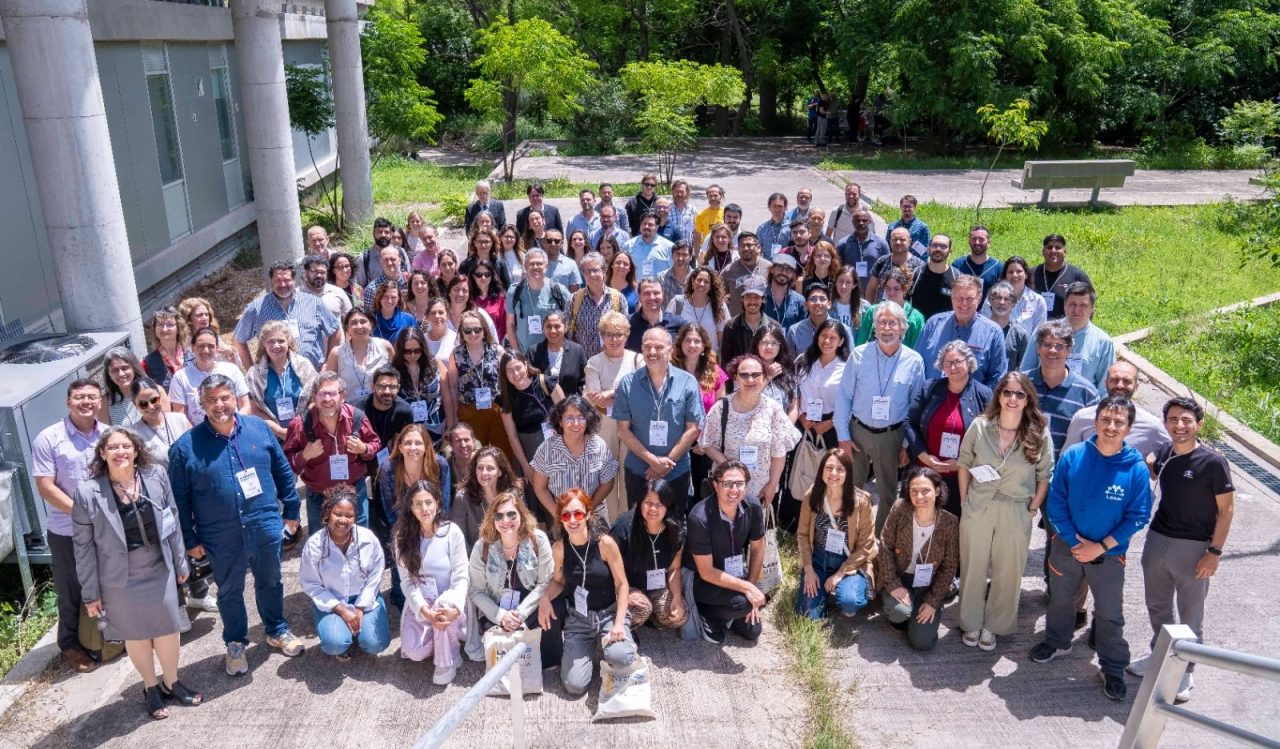
LABI Meeting 2025 gathered researchers, institutions, and partners from across Latin America for three days of exchange, collaboration, and shared purpose in Buenos Aires. This year’s meeting showcased how connecting technology, people, and ideas can accelerate scientific progress across the region.

Day 1: Technology in Action
The meeting opened under the theme Technology in Action: Driving Scientific and Biomedical Breakthroughs. Fernando Stefani (CIBION-CONICET, Argentina) set the stage with a keynote on how imaging technologies are reshaping discovery. Claire Brown (ABIF, McGill University, Canada) emphasized the importance of global bioimaging networks, followed by a round table on democratizing access to advanced technologies in Latin America.

The technical session In-vivo Imaging: From Cell to Human, moderated by Nicole Salgado (Universidad de Chile), highlighted real-world examples of regional innovation, featuring contributions from Leonel Malacrida, Rupert Ecker, Emiliano Medei, and Fernanda Tovar-Moll. Lightning Talks brought creative perspectives from emerging researchers, and LABI’s Working Groups presented advances in Data Science, Outreach, and Training.

The day concluded with a special Honoris Causa ceremony recognizing Carlos Bustamante (UC Berkeley) for his groundbreaking contributions to single-molecule force spectroscopy. LABI Network Manager Andrés Olivera closed the day by emphasizing how LABI Fellowships help accelerate technology adoption across the region.

Day 2: Data Science & Infrastructure
The second day focused on building stronger foundations for open, FAIR, and AI-ready data in Latin America. Stephan Preibisch delivered an inspiring keynote that led into a round table on sustainable and collaborative regional data infrastructure.

Sessions throughout the day showcased practical applications of data science — from AI-driven analysis to open-access tools developed within Latin America. Lightning Talks once again highlighted the creativity and depth of the community.

Workshops and networking activities filled the afternoon, with participants engaging in topics such as FAIR data management, grant writing, and South–South partnerships. As LABI’s Network Manager reminded us:

“When you connect people strategically, individual transformation scales into systemic change.”

This idea captured the spirit of the day and reaffirmed LABI’s mission to empower regional leadership in science.

Day 3: Connecting Institutions and Communities
The final day focused on bridging research, education, and public engagement. In the morning, participants visited imaging facilities at the Universidad de Buenos Aires, exploring advanced technologies, collaborative spaces, and ongoing research across UBA centers.

In the afternoon, two outreach activities demonstrated LABI’s commitment to open and accessible science. Microscopists from across Latin America collaborated with local school teachers on cellphone microscopy demonstrations as part of UBA’s Science Week and the LABI Outreach and Integration Working Group. In parallel, interactions with students and researchers highlighted how bioimaging connects to public health, education, and environmental challenges.

LABI Meeting 2025 closed with renewed energy and a strengthened regional network committed to driving scientific innovation in Latin America. And this journey continues — we’ll meet again next year in Panama!

WhatsApp-Image-2025-09-23-at-10.32.36-1280x960.jpeg

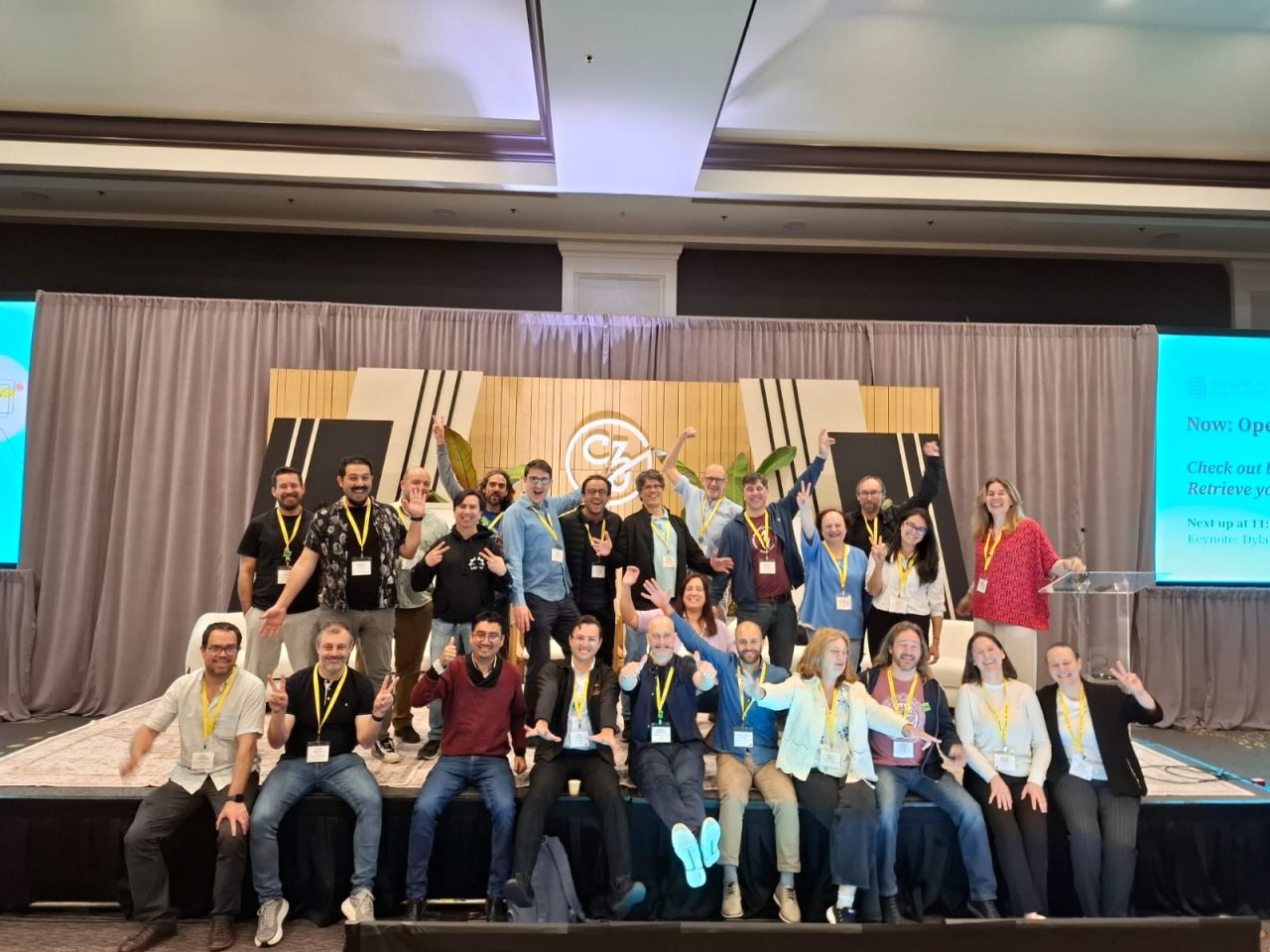
Last week, the LABI Community took part in the Chan Zuckerberg Initiative’s Imaging the Future Meeting 2025, a global event that brings together leaders in the imaging field to share knowledge, exchange ideas, and build new collaborations.

This inspiring gathering continues to shape the future of imaging worldwide. LABI joined colleagues from different regions, disciplines, and technologies to strengthen dialogue and develop strategies that drive scientific advances across multiple dimensions.

Through these exchanges, we reaffirm our commitment to positioning Latin America at the forefront of bioimaging. By connecting people, infrastructure, and knowledge, LABI works to ensure that advanced imaging technologies reach more scientific communities throughout the region.

Together with our global partners, we move forward toward a more collaborative, innovative, and connected scientific future

LABIMeeting25-RegistrationOpen-webblog-1280x960.png

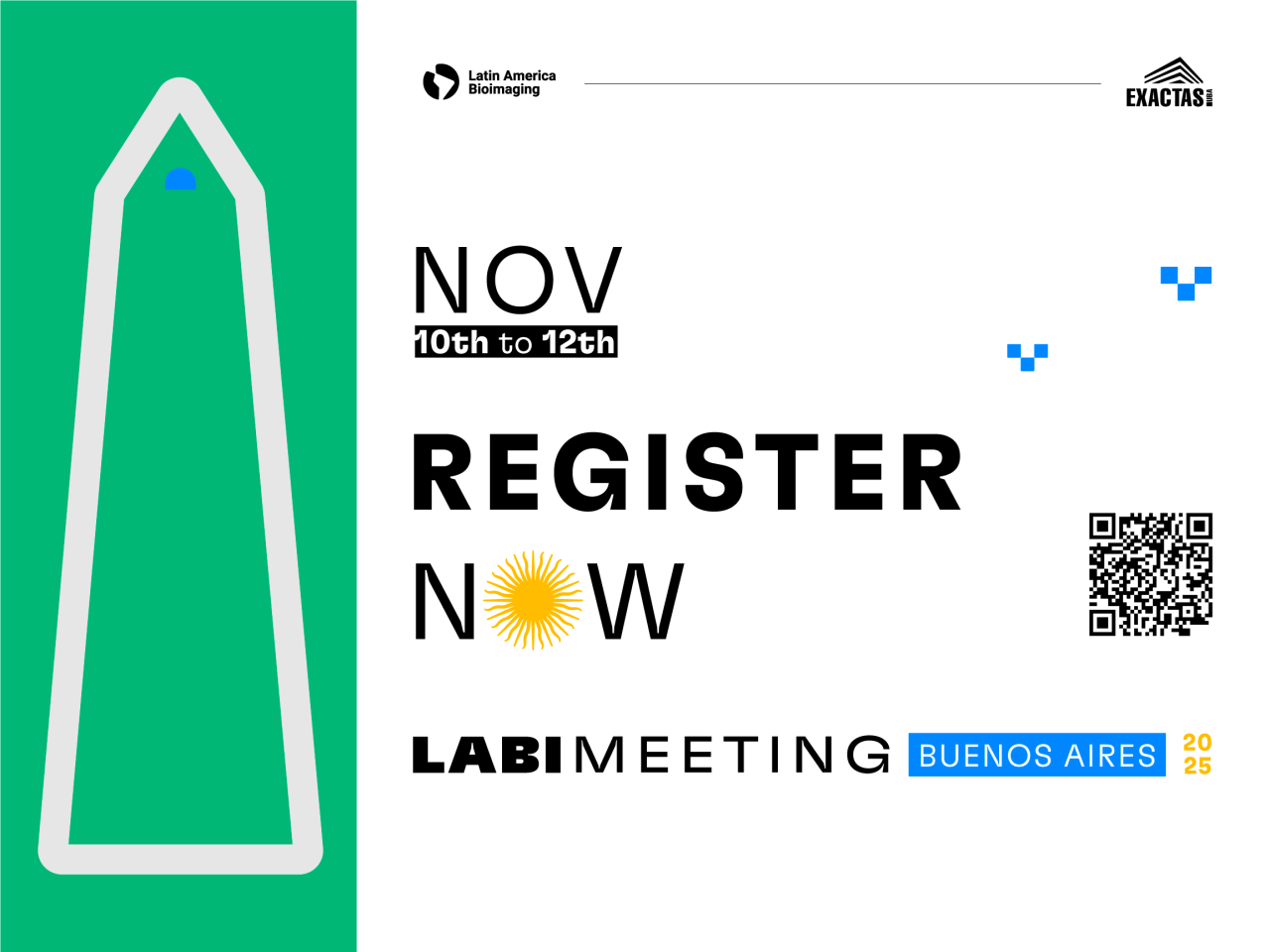
This November, the Latin America Bioimaging (LABI) Community will gather in Buenos Aires for the most important event of the year: LABI Meeting 2025, taking place from November 10–12.

With the theme “From Data to Discovery”, this edition will bring together leading voices from across Latin America and international partners to foster dialogue, spark innovation, and strengthen collaborations that are shaping the future of bioimaging in the region.

Main Event Topics:

  • November 10 – Technology in Action: Driving Scientific and Biomedical Breakthroughs
    Exploring successful use cases, sustainable models for technology adoption, and cutting-edge imaging tools transforming biomedical research.

  • November 11 – Data Science & Infrastructure: Building Foundations for Open, FAIR & AI-Ready Data
    A deep dive into cloud infrastructure, FAIR data principles, and AI-driven tools aimed at reinforcing the digital backbone of bioimaging in Latin America.

  • November 12 – Facility Visits & Outreach Activity
    Hands-on experiences with facility tours and a dedicated outreach activity designed to increase visibility and engage the broader scientific community.

LABI Meeting 2025 is more than a conference — it is a space to connect, collaborate, and envision new possibilities for bioimaging across the region and beyond.

Don’t miss your chance to be part of this transformative event.
Register now: LABI Meeting 2025 Registration Form

1756387677842-1280x960.jpeg

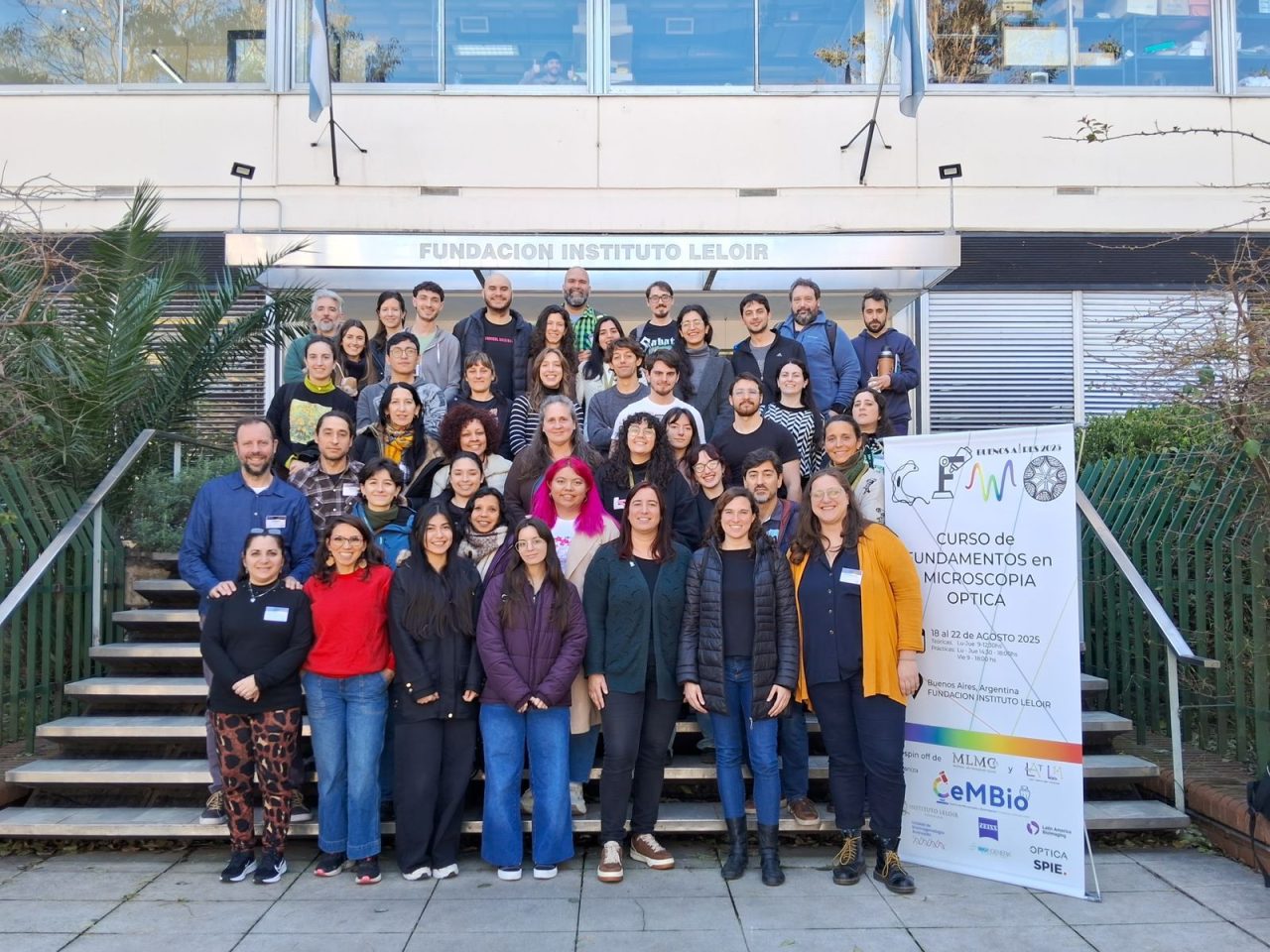
Last August, a three-day Microscopy Fundamentals course took place at Fundación Instituto Leloir in Buenos Aires, bringing together experts and participants for an intensive learning experience. The program combined insightful lectures with practical sessions on fluorescence microscopy, confocal laser scanning, TIRF, spinning disk, multidimensional and live imaging, as well as pre- and post-imaging care.

Two of our LABI fellows, Vanessa Monge (Centro Internacional Cabo de Hornos, Chile) and Natalia Pagliaro (Instituto Tecnológico de Chascomús – La Plata, Argentina, CONICET), took part in the course, enhancing their skills while contributing to the strengthening of the Latin American bioimaging community. Vanessa traveled from one of the southernmost points of the continent, while Natalia, whose research focuses on embryonic germline stem cell proliferation and its molecular and epigenetic regulation, brought valuable insights to enrich the discussions.

We extend our gratitude to BIOINGENIERIA, Fundación Instituto Leloir, and the dedicated instructors — including Claire Brown — for making this training possible and for empowering the region’s bioimaging scientists.


1751562535561-1280x815.jpeg

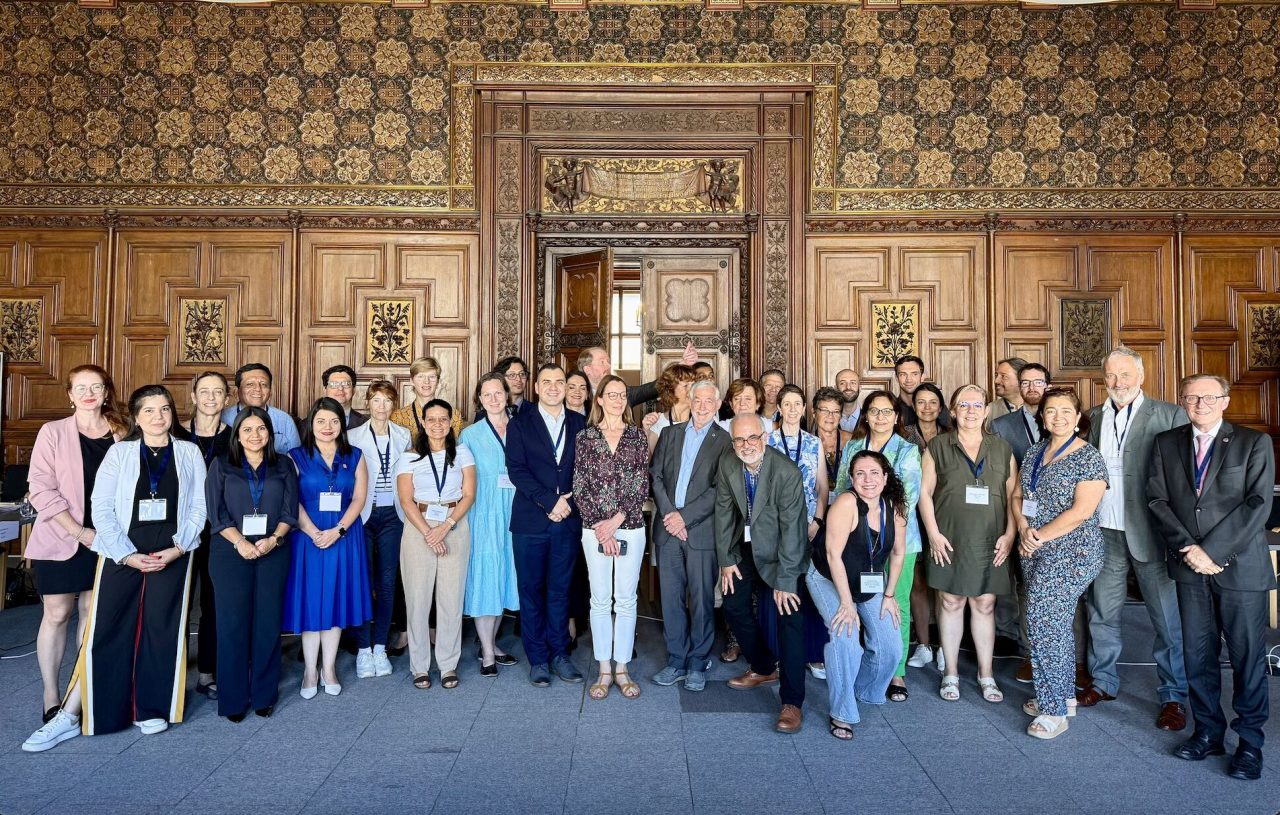
On June 24–25, the 15th meeting of the EU–CELAC Research Infrastructures Working Group (RI WG), organized by the European Commission, took place in Vienna, Austria. This edition focused on the digitization of research infrastructures and their key role in advancing collaboration, open access, and interoperability across regions.

No hay descripción alternativa para esta imagen

During the meeting, the five thematic hubs established under the Latin American and Caribbean Forum for Research Infrastructures (LACFRI) presented their 2025–2026 work plans, outlining strategic objectives for the coming years.

Representing LABI, Andrés Olivera —LABI’s Network Manager— highlighted the strategic role of regional scientific networks in translating bi-regional political priorities into actionable, community-driven frameworks. His intervention emphasized LABI’s contribution to advancing integration in the field of imaging, demonstrating that connection between infrastructure, data, and people is possible when supported by strong regional and global cooperation.

No hay descripción alternativa para esta imagen


   No hay descripción alternativa para esta imagen

Through our growing collaboration with CEBEM (Centro de Biología Estructural del Mercosur), Euro-BioImaging, and Instruct-ERIC, LABI continues to shape practical models for implementing open, fair, and AI-ready infrastructures in Latin America.

The meeting brought together national representatives, institutional delegates, and experts in a collaborative and forward-looking environment. At LABI, we remain committed to strengthening cooperation, enhancing research infrastructures, and contributing to a more integrated, inclusive, and accessible scientific ecosystem across Latin America.