News

LABI-IEM-bannerweb-eng-1-1280x962.png
First Series: Microscopy in Practice | Behind-the-Scenes Experiences in Bioimaging

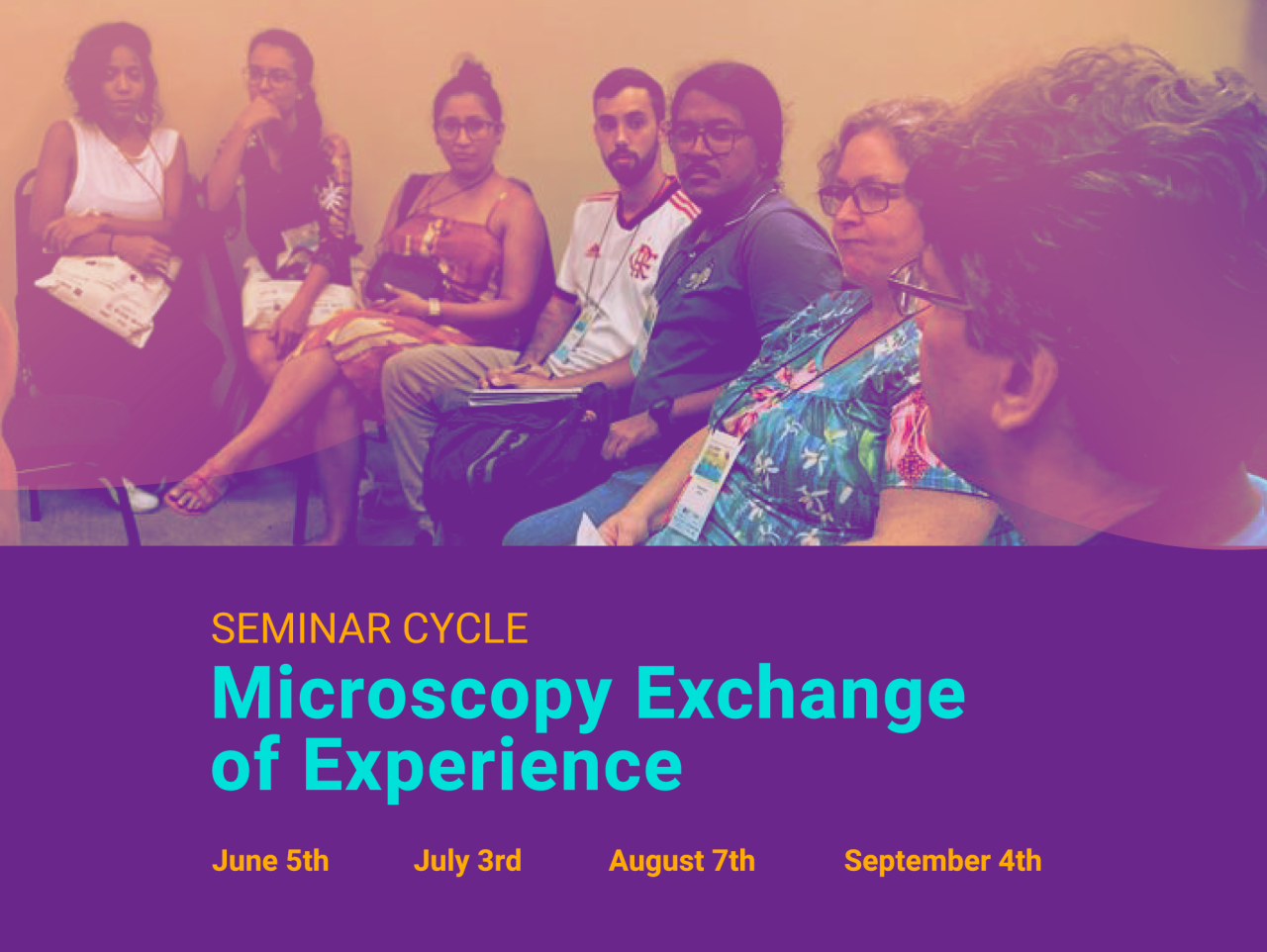
From LABI’s Training & Education Working Group, we are launching this new virtual space to share experiences, lessons learned, and everyday challenges in bioimaging: Microscopy Experience Exchange (MEE).

This series of virtual seminars aims to share practical insights, key lessons, and common challenges we face in our daily work with microscopy. We invite you to join this space to strengthen collaboration, showcase technical knowledge from the region, and build collective capacities.

Event Details
  • Format: Virtual (with registration)
  • Time: 12:00 PM (GMT-3)
  • Duration: 60 minutes
  • Structure: Introduction + short presentations (10 min each) + 20 min for discussion
Register here

———————————-
Description: To obtain quality images, a well-prepared sample is essential. In this first meeting, we invite you to listen and discuss some practical aspects that impact image quality, such as fixation technique and light scattering.

Key question: How does the preparation method impact the final quality of the fluorescence image?

  • Thursday, June 5 – 12:00 (GMT-3)
  • Speakers: Aníbal Vargas (Chile), Iván Rey (Colombia)
  • Moderator: Victoria Repetto

——–

Description: In this second meeting, we invite you to share practical experiences on sample preparation for electron microscopy, comparing strategies based on available equipment and brands.

Key questions: How does the type of equipment available influence the sample preparation strategy? What variables should be considered when choosing the equipment and preparation method?

  • Thursday, July 3 – 12:00 (GMT-3)
  • Speakers: Andreia Lo Costa (Brazil), Liseth Garibaldi Sosa (Chile)
  • Moderator: Iván Rey

——–

Description: In this third session, we will explore the challenges of experimental design in Latin American contexts, taking into account technical and resource constraints. We will share examples where local interactions have led to the development of creative solutions for designing and executing microscopy experiments and look behind the scenes at how these interactions emerged.

Key Question: How to design a robust microscopy experiment considering local constraints?

  • Thursday, August 7 – 12:00 (GMT-3)
  • Speakers: Samuel Rocha (Brazil), Marcela Díaz (Uruguay)
  • Moderator: Victoria Repetto

——–

Description: In this fourth meeting, we will delve into the advantages of regional exchanges and discuss how to maximize short laboratory stays by structuring an effective work agenda.

Key Question: What elements should a work plan include to maximize learning during a short visit? How can an efficient training agenda be structured for technical stays?

  • Thursday, September 4 – 12:00 (GMT-3)
  • Speakers: Vanessa De Cássia (Brazil), Victoria Repetto (Argentina)
  • Moderator: Iván Rey
Would you like to propose a topic or participate as a speaker in upcoming series? Write to us!

This space is collaborative and is built with the entire LABI community.

imgarticuloblog-1280x854.png

Challenges of microscopy technology dissemination to resource-constrained communities

A new achievement for the imaging community

A year ago, we participate along with actors from different continents involved in the development, dissemination, and funding of bioimaging technologies gathered at Janelia Research Campus for the conference “Imaging Technology Dissemination to Underserved Communities.” The productive discussions held there have now been distilled into a newly published article:
“Challenges of microscopy technology dissemination to resource-constrained communities.”

This new Nature Methods article emphasizes the importance of setting technology adoption with the capability to produce scientific outcomes as the ultimate goal of dissemination efforts, especially in regions with limited resources. It explores current global efforts in microscopy dissemination and outlines key challenges and potential strategies moving forward.

Once again, LABI is recognized for its key role in the development of training opportunities and access to cutting-edge technologies and for its efforts in building capacity, fostering community, and promoting global integration with the international bioimaging community.

We are proud to be part of a global movement that is actively working to make science more equitable and collaborative.

Read the full article here (PDF)


IMG_6380.00_04_15_22.Imagen-fija001-1280x720.png

During the week of April 7–11, the Fundamentals in Optical Microscopy course was held at the Institut Pasteur de Montevideo. We took this opportunity to speak with Dr. Claire Brown, Director of the Advanced BioImaging Facility (ABIF) at McGill University in Montreal, and one of the key figures behind the Train-the-Trainer model in microscopy. Claire shared her vision on how building an international network of expert microscopy trainers, rather than working in isolation, and sharing training materials can accelerate the spread of knowledge, empower new trainers, and strengthen sustainable microscopy education around the world.

———-

When Claire Brown, Director of the Advanced BioImaging Facility at McGill University, began developing microscopy courses 15 years ago, she had to build everything from scratch. “It was a lot of work, and I’ve never liked to see people reinvent the wheel,” she recalls. Her solution? Share the wheel, and teach others how to drive.

That philosophy became the foundation for the Train-the-Trainer (TtT) model in light microscopy, a program that not only offers technical instruction but also fosters a collaborative international community of educators. Claire’s vision has been instrumental in shaping sustainable training ecosystems around the world, including in Latin America.

“The idea of training trainers and sharing training resources, so people could build on it and make it better for their own communities, was really appealing to me,” Claire explains.

So far, the TtT course has been held in Buenos Aires and Montreal, training 37 microscopy educators from various countries. The next edition is set to take place in Melbourne, Australia, expanding this vibrant network even further.

But beyond teaching microscopy fundamentals, the TtT model is about building human connections. During the course, Claire dedicates time for participants to introduce themselves, share their background and even talk about their hobbies. “That really breaks the ice and helps build lasting connections,” she says.

One of the most inspiring success stories of this approach is that of Marcela Díaz, a biologist-turned-imaging scientist from Uruguay. Trained by Claire, Marcela has gone on to lead two editions of the Curso de Fundamentos en Microscopía Óptica through the Advanced Bioimaging Unit (UBA) in Montevideo.

“This year, Marcela organized the entire course herself, along with her team. I came just to support, and it’s wonderful to see that they don’t need me anymore,” Claire says proudly. “That’s success: when the knowledge lives on and grows without you.”

Marcela recently shared her journey in Nature Careers, highlighting how mentorship helped her transition from trainee to trainer and build new training pathways in Latin America. Read the full article here.

At LABI, we believe that initiatives like Claire’s are crucial for strengthening the region’s scientific capacity and training the next generation of researchers so that they have the tools and expertise they need for scientific discovery and innovation. Her work not only improves access to quality training but also creates a culture of sharing, mentorship, and collective growth.

“By doing it as a community and sharing the resources,” Claire emphasizes, “we’re able to reach more people, much faster.”

And that’s exactly the kind of momentum we need to keep building a thriving bioimaging ecosystem, from Montreal to Montevideo, and beyond.


UnconferenceFoto1-1280x720.png

LABI at DISC Unconference 2025

The DISC Unconference is designed to develop tools and facilitate activities that promote a more diverse and inclusive open-source scientific computing community. Through a participatory format, attendees collaborate in creating resources and strategies that can be shared with the global community.

In the 2025 edition, held at IBM (São Paulo, Brazil), 35 participants made up of new contributors, project maintainers, open source enthusiasts, and champions of community inclusion efforts interested in impacting their community through an unconference style event. During the event, ideas and scalable solutions were generated to foster the growth of more diverse and welcoming communities.


Representing LABI, Andrés Olivera, Network Manager, participated and collaborated on the project “Navigating funding landscape for research in Low-to-middle-income countries,” led by Open Life Science. A lack of clear pathways to understand available funding opportunities, effective approaches to accessing funding, and established networks where experienced members share skills and resources, diminish the chances of securing appropriate funding for most research initiatives. Over three days of intense work, significant progress was made in implementing collaborative projects that impact access to training and research resources. 

The event provided an ideal environment for exchanging knowledge and experiences, facilitated by a group of dedicated and supportive professionals committed to developing a more open scientific community.

At LABI, we will continue working on this initiative, reaffirming our commitment to building a more open and accessible scientific ecosystem for all.

1.png

Join the LABI Team

Communications Manager Opportunity

Are you ready to drive meaningful impact in science communication? LABI is seeking a Communications Manager  to join our team and help shape the future of bioimaging in Latin America & the Caribbean.

About LABI
Latin America Bioimaging (LABI) is a collaborative initiative empowering regional biomedical research through cutting-edge imaging technologies, training, and open science. We’re building an inclusive and connected bioimaging community to foster scientific progress and innovation.

Position Details

  • Role: Communications Manager
  • Location: Remote (LATAM-based)
  • Hours: Part-time (30 hours/week)
  • Duration: December 2024 – July 2025 (potential for renewal)
  • Compensation: $1200–1500/month (net)

What You’ll Do
As LABI’s Communications Manager, you will:

  • Develop and execute our communications strategy
  • Create engaging digital content (social media, newsletters, blog posts)
  • Manage LABI’s website and social media channels
  • Build media relationships and enhance LABI’s visibility across LATAM
  • Evaluate and refine communication efforts based on KPIs
SEE FULL DESCRIPTION

https://docs.google.com/document/d/1mcfuVxawUS6FqKzQfjEKieDZ35ROoPtK7YpYqLpYh-U/edit?tab=t.0

Why Join LABI?

  • Work remotely from anywhere in Latin America or the Caribbean
  • Help democratize access to bioimaging technologies
  • Be part of a dynamic, inclusive team driving scientific progress

How to Apply
Applications are open until December 15, 2024. Apply by submitting your CV and optional portfolio via this application form.

APPLY

https://docs.google.com/forms/d/e/1FAIpQLScAeVt2zg_vLtCyV3jjhky_pOlwCS_hacJi0duJvOfatVmE1w/viewform?usp=sharing

We look forward to hearing from you and building the future of bioimaging together!


Ciclo-Seminarios-Outreach.pptx-3-1280x720.jpg

Ciclo de seminarios: Ciencia en Conexión

LABI invita a toda la comunidad a participar en su primer ciclo de seminarios organizado por el grupo de trabajo Divulgación e Integración. Este primer ciclo se centrará en intercambiar experiencias, lecciones aprendidas y qué factores considerar cuando se organiza un evento de divulgación científica en América Latina.

Detalles del Evento
  • Modalidad: Virtual
  • Fechas: Cada martes de noviembre (5, 12, 19, 26)
  • Hora: 12 pm (CT / UTC-6)
  • Duración: 20 min. cada presentación, 20 min. intercambio / 60 min total
Registro: Cliquear aquí


Temas del Primer Ciclo: Experiencia y lecciones aprendidas


  1. Lecciones Aprendidas: Organizando Eventos Científicos con Público no Científico 

Descripción: Relatos de organizadores que han llevado eventos de divulgación científica a comunidades no vinculadas a la ciencia, destacando los desafíos y éxitos en la interacción con estas audiencias.

  • Fecha: 5 de Noviembre
  • Expositor: Haydee Hernandez, Diego Delgado

2. Impacto a Largo Plazo: Cómo Crear Eventos que Resuenen

  • Descripción: Experiencias de eventos que no solo lograron atraer público, sino que también generaron un impacto duradero en la comunidad y fomentaron el interés continuo en la ciencia.
  • Fecha: 19 de Noviembre
  • Expositor: Licyel Lenny, Virginia Albarracin

3. Innovación en Divulgación: Nuevas Formas de Involucrar al Público

  • Descripción: Presentación de experiencias innovadoras en la organización de eventos, como el uso de tecnología, formatos no tradicionales, o la integración de arte y ciencia para captar la atención del público.
  • Fecha: 26 de Noviembre
  • Expositor: Federico Brown, Federico Lecumberry

4. Superando Obstáculos: Manejo de Crisis en Eventos Presenciales
  • Descripción: Historias de cómo los organizadores han enfrentado y resuelto problemas inesperados durante eventos de divulgación, desde problemas técnicos hasta cambios de última hora.
  • Fecha: 12 de Noviembre
  • Expositor: Jorge Toledo, Hernan Grecco

Este ciclo de seminarios es una oportunidad única para conocer experiencias de primera mano en divulgación científica y cómo podemos construir una cultura de comunicación científica en nuestra región. ¡No te lo pierdas!

IMAGE-DATA-MANAGEMENT_page-0001-1280x905.jpg
RI-Hubs Project: Enhancing Research Infrastructure Collaboration between Latin America and the EU

Latin America Bioimaging (LABI) participates in the RI-Hubs Project, an initiative aimed at creating and consolidating regional hubs in Latin America and the Caribbean (LAC) in collaboration with the European Union (EU). This project fosters a synchronized dynamic between Research Infrastructures (RI) in LAC and the EU, promoting the shared values of scientific excellence, open access, and cooperation in research.

The RI-Hubs Project brings together eight partner institutions from Brazil, Peru, Uruguay, Spain, Italy, and Portugal, all working towards the provision of open access research infrastructure to users and building stronger international scientific partnerships.

As part of this collaboration, we are organizing a series of webinars to explore key topics related to research infrastructure and data management, including:

  • Data Management: Focusing on Image Data Management in bioimaging and structural biology.
  • Science Diplomacy: Highlighting the importance of international scientific cooperation.
  • Facility Management: Discussing best practices for managing research infrastructures.

Our first webinar, titled “Image Data Management”, will take place on October 8th, 04:00 PM CEST and will feature leading experts from both Latin America and Europe.

Click here to register to the Webinar

To learn more about the RI-Hubs Project and its objectives, please visit the project’s official website: https://biocomputingunit.es/ri-hubs/

Stay tuned for more updates on this exciting collaboration and join us as we continue to strengthen the ties between Latin American and European scientific communities!

#ResearchInfrastructure #RIHubs #OpenAccess #Bioimaging #Collaboration #ScienceDiplomacy #DataManagement #LatinAmerica #EU

WhatsApp-Image-2024-06-03-at-1.42.43-PM-1.jpeg
EVENT ORGANIZERS

Argentina. Andres Rossi, Co-Chair of the Training Working Group at LABI and Manager of the Core Imaging Facility at Leloir Institute; Victoria Repetto, Co-Chair of the Training Working Group at LABI and Imaging Scientist, University of Buenos Aires, Lia Pietrasanta, Chair of the LABI Steering Committee, Associate Professor, University of Buenos Aires.

Uruguay. Marcela Diaz, Co-Chair of the Training Working Group at LABI and Imaging Scientist and Manager, Advanced BioImaging Unit, Institut Pasteur, Montevideo; Leonel Malacrida, Member of the LABI Steering Committee, Associate Professor and Director of the  Advanced Bioimaging Unit, University of the Republic and Institut Pasteur Montevideo; Andres Olivera, LABI Network Manager. 

Canada. Claire M. Brown, BioImaging North America Co-Chair, Canada BioImaging President and Professor & Director, Advanced BioImaging Facility at McGill University.

EVENT OBJECTIVES AND GOALS

From June 3-7, 2024, a team of highly motivated image scientists organized the Latin America Light Microscopy Fundamentals Train-the-Trainer (LatLM-TtT) course at the Leloir Institute Foundation and University of Buenos Aires in Buenos Aires. During this event, twenty-three imaging scientists and researchers from across Latin America and Africa received training on how to run a fundamentals light microscopy course in their home regions.

The overall goals of the course were to:

  1. Train a community of imaging scientists how to run a fundamentals microscopy course.
  2. Provide resources to trainers, including presentation slides, course logistics guidelines, and hands-on activities.
  3. Build a community of trainers that will continue to work together and build capacity in light microscopy by implementing fundamentals microscopy courses across Latin America and Africa.
  4. Work as a team to continue building the trainers’ community by planning and running future training-the-trainer optical microscopy fundamentals course editions.

SEE FULL ARTICLE